
Understanding M-Pesa Withdrawal Rates: Fees, Limits, and Recent Changes
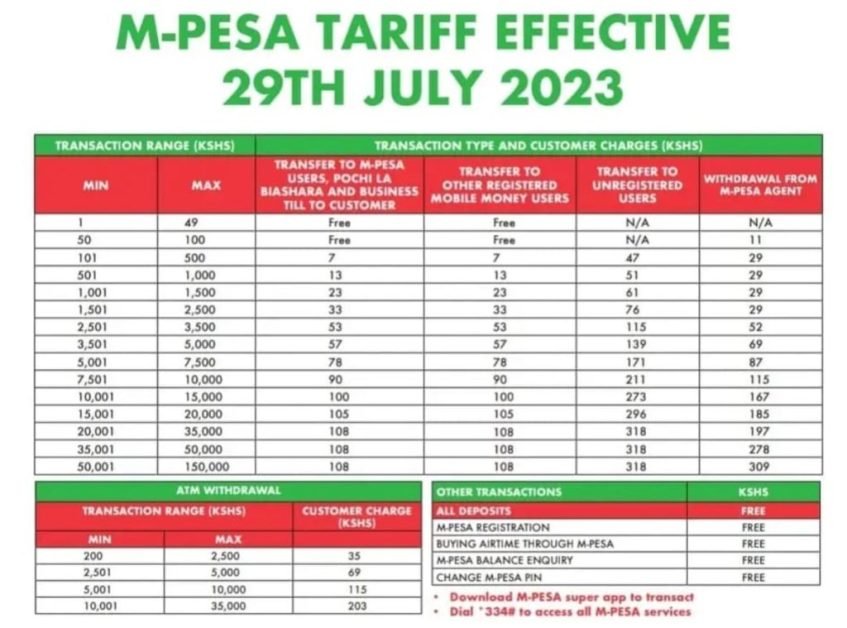
Many Kenyans check their M-Pesa balance before heading to an agent, wondering how much the withdrawal will cost. With fees that vary by amount and recent adjustments for low-income users, understanding the current rates helps avoid surprises. This article breaks down the fee structure, key changes over time, and how M-Pesa compares to other cash-out options.
How M-Pesa Withdrawal Fees Are Calculated
M-Pesa withdrawal rates are not a single percentage but a tiered fee schedule set by Safaricom. For example, withdrawing 50 KES costs around 11 KES in fees, while larger amounts incur a lower percentage. The fee typically ranges from 0.5% to 1% of the transaction value, depending on the amount. Safaricom introduced M-Pesa in Kenya in March 2007, and the fee structure has evolved since then. The Central Bank of Kenya regulates these rates to ensure affordability and fair access. Agents earn a commission from each withdrawal, which partly determines the fee. safaricom.co.ke/main-mpesa/m-pesa-for-you/tariffs-limits/consumer-tariffs-limits” rel=”noopener noreferrer” target=”_blank”>M-PESA Charges – Safaricom
Timeline of Key Changes to M-Pesa Withdrawal Rates
In 2020, Safaricom reduced withdrawal fees for amounts under 1,000 KES to ease the economic impact of COVID-19. This move made small cash-outs cheaper for millions of users. In 2023, the company introduced free withdrawals for amounts up to 100 KES for low-income users, a significant step toward financial inclusion. Over the years, the maximum withdrawal per transaction has increased to 150,000 KES, with a daily limit of 300,000 KES. These adjustments reflect Safaricom’s response to user needs and regulatory guidance.
| Withdrawal Amount (KES) | Approximate Fee (KES) | Effective Rate |
|---|---|---|
| 50 | 11 | 22% |
| 1,000 | 27 | 2.7% |
| 10,000 | 75 | 0.75% |
| 150,000 | 300 | 0.2% |
M-Pesa Withdrawal Rates vs. Bank ATM Fees
Withdrawing cash from an M-Pesa agent is generally cheaper than using a bank ATM. ATM fees often include a flat charge plus a percentage, and they can be higher for non-customers. M-Pesa fees are lower for small amounts, especially after the 2020 reductions. However, for very large withdrawals, bank ATMs may offer competitive rates. M-Pesa also offers convenience, with agents available in many rural areas where bank branches are scarce. The trade-off is that agents may have cash limits, while ATMs can dispense larger sums.
Current Status and Recent Developments in 2024
As of 2024, M-Pesa withdrawal rates remain stable, with no major changes announced. The free withdrawal option for amounts up to 100 KES continues to benefit low-income users. Safaricom has over 50 million active users across Africa, with Kenya as the largest market. The company regularly reviews its tariff structure in consultation with regulators. Users can check the latest fees on the Safaricom website or via the M-Pesa app. Future adjustments may focus on further reducing costs for small transactions to promote digital payments.
Frequently Asked Questions
Is M-Pesa still charging withdrawal fees in 2024?
Yes, M-Pesa still charges withdrawal fees for most transactions. However, withdrawals of up to 100 KES are free for low-income users, a policy introduced in 2023. Fees for other amounts remain unchanged as of 2024.
Where can I find the official M-Pesa withdrawal rate table?
The official fee schedule is available on the Safaricom website under tariffs and limits. You can also check the M-Pesa app or dial *234# for current rates. Agents are required to display the fee chart.
How does M-Pesa withdrawal fee differ from sending money?
Withdrawal fees are charged when you convert mobile money to cash at an agent. Sending money to another M-Pesa user incurs a different fee, usually lower for small amounts. Both are tiered based on transaction value.
What impact did the 2020 fee reduction have on users?
The 2020 reduction lowered fees for withdrawals under 1,000 KES, making small cash-outs more affordable during the COVID-19 pandemic. This encouraged more people to use M-Pesa for everyday transactions and helped reduce cash handling.
How many M-Pesa agents are there in Kenya?
M-Pesa has over 200,000 agents in Kenya, making it one of the most accessible mobile money networks. This extensive network allows users to withdraw cash conveniently, even in remote areas.
Tips for Minimizing M-Pesa Withdrawal Costs
To reduce fees, consider withdrawing larger amounts less frequently. The effective rate drops significantly for sums above 10,000 KES. For example, withdrawing 150,000 KES costs only 0.2% compared to 22% for 50 KES. Another strategy is to use M-Pesa for payments directly instead of cashing out. Many merchants accept M-Pesa, avoiding withdrawal fees entirely. You can also transfer money to a friend and ask them to withdraw on your behalf if they have lower fees. Finally, keep an eye on promotional periods when Safaricom occasionally offers reduced rates.
How M-Pesa Withdrawal Rates Compare Across African Markets
M-Pesa operates in several African countries, each with its own fee structure. In Tanzania, withdrawal fees are generally lower than in Kenya, with a flat rate of about 0.5% for most transactions. In Ghana, fees are higher for small amounts but competitive for larger ones. The differences reflect local regulations, competition, and operational costs. Safaricom’s Kenyan rates are among the most affordable in the region for small transactions, thanks to regulatory pressure and the company’s scale. However, users in other markets may find better deals for high-value withdrawals.